Some virtues, folklore, and use of lemon balm and mint

If you grow lemon balm in the garden, also known simply as balm or sweet balm, you’re likely aware of this Mint family member’s many virtues.

Introduced from Europe, this perennial herb has erect square stems and stands about two feet tall. The whole plant is covered with a soft down, and if the foliage is touched, even as soon as it’s just emerging from the earth in spring, it offers an abundance of that sweet lemon fragrance it’s famous for.

The flowers, insignificant looking really to us humans, are a magnet for bees, so in that respect, not insignificant at all! The Latin name, ‘Melissa officinalis’ comes from the Greek word ‘Melissa‘, which translated literally means ‘bee‘.

According to folklore, apiarists of old would rub the leaves of lemon balm inside older hives, inducing new swarms to remain and take them over.
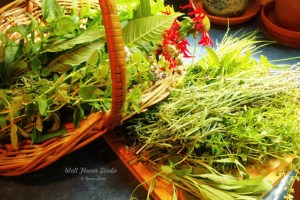
Lemon balm thrives in poor soil, (I can account for that), and thrives in both sun or shade.

In fact, thrive is an understatement. Like any mint, it is an aggressive and prolific plant. It will take over the whole garden and your lawn if you let it. I suggest planting any in a big pot, then sinking it in to the ground if you don’t want its thick runner roots to escape.

I can’t lecture anyone about that because it did escape in my garden. Now I have to keep it (somewhat) contained by mowing parts of it down, (which likely helps it spread), but that lemon scent wafting through the air as I cut the lawn smells divine!

This herb makes a lovely tea. Hot or cold, it can be used to flavour lemonade. Mixed with Chamomile, lemon thyme, and lemon balm, this soothing tea tastes wonderful. It can be very relaxing if one is feeling stressed. Adding a little honey will sweeten the mix, too.

It must be said however, if one is on any thyroid medication, lemon balm may interfere with thyroid hormone-replacement therapy. It’s best avoided in this case, and I hasten to add, always check with a doctor, pharmacist, or certified herbalist first.

According to Mrs. Grieve, lemon balm as a drink induces a mild persperation, makes a pleasant, cooling tea for feverish patients, and, if used with salt, can be used to ease gout.

As most lemon flavours go, it’s especially nice with fish and pork. It also adds a light flavour to stews and soups. I’ve been drying this and many herbs, for a long time. Mixing them together with sea salt is an easy way to create a rub for meat, poultry, or in a salad. Steeping mints and lemon balm in vinegar, then straining is an easy way to create an herbal flavour to be used on salads, or in other culinary recipes. If you don’t like the flavour, it makes a nice hair rinse, leaving your locks shiny and healthy looking! Just don’t get any in your eyes. It will sting!

I harvest my lemon balm in the morning after the dew has evaporated, but before the high sun of the day. Use it fresh if you can, because that’s when most herbs are most potent in flavour, aroma, and qualities. Otherwise, it’s easily dried and if you harvest it before it flowers, but do leave some behind to encourage bees in the garden. Hung upside in small bunches to dry, it only takes a few days to do this, and when it’s crispy, break it all up and keep it in a jar for future use.
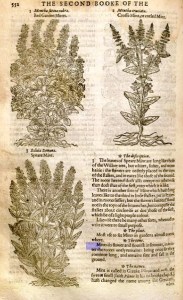
With regards to folklore, and in addition to Lavender, Mandrake, Deadly Nightshade, Cardamom, Plantain, Juniper, Saffron, and a host of other plants, the mint family members, including lemon balm, are considered Witches plants.

The sacred knowledge of these plants in particular were given by the Greek goddess Hecate to her daughters, Circe and Medea, and were considered consecrated herbs by this mythical trio.

According to Culpeper, ‘It is an herb of Jupiter, and under Cancer, and strengthens nature much in all its actions. Let a syrup made of the juice of it and sugar be kept in every gentlewoman’s house, to relieve the weak stomachs and sick bodies of their poor sickly neighbours: as also the herb kept dry in the house, that so with other convenient simples, you may make it into an electuary with honey.’

Flower language in folklore tells us that Lemon balm and the mint family equates with wisdom, virtue, and abundance. Customary in medieval times, peasants would ‘strew the churches with Mint or other herbs and flowers’ at funerals as a devotion to the Virgin Mary, where a poem from this custom illustrates it well

“Thou knave, but for thee ere this time of day
My lady’s fair pew had be streed full gay
With Primroses, Cowslips, and Violets sweet,
With Mints, and Marygold and Marjoram meet,
Which now lyeth uncleanly, and all among of thee.”

In the Abruzzi region of Italy, women who chanced upon sweet balm or mint would pick and bruise a leaf between their fingers as insurance for the day of their death, and that ‘Jesus Christ would assist them into Heaven.’

Gerarde stated about all mints, “It poured into the eares, taken inwardly against sea scorpions, serpents, and applied with salt, to the bitings of mad dogs.”

All very interesting! But, here’s hoping nobody’s path crosses with mad dogs, serpents or sea scopions.

Another suggestion, if like me, you grow way more herbs than you can possible use, and don’t like to see them go to waste, make some kindling bundles. These take no time to put together and are nothing more than dried herbs rolled into bundles and tied with raffia, used as kindling or fire starters. – Perfect for that cottage camp fire in summer, all you have to do is harvest some herbs, including mint, lavender, thyme, marjoram, etc., tie them together and use when you need them. They offer a lovely scent with which to light a fire, or, as an offering to the gods if you’re feeling particulary Witchy under a full moon.

With all of the information above, I may have either encouraged people to grow lemon balm and other mints, or totally scared them off! However, they are such useful herbs and I recommend anyone growing them in the garden.

As I sit here looking wistfully out the window, observing the three feet of snow still covering my yard, I’m actually looking forward to cutting the grass this year, and inhaling that lovely lemon scent.


References

  • The Herb Garden Guide – ERIC ED242477 – Lathrop E. Smith Environmental Education Center
  • The American Herbalist Guild – Pub Med and additional resources
  • The healthy life beverage book – Knaggs, H. Valentine, University of Leeds. Library, 1911
    Publisher, London : C.W. Daniel
  • A Modern Herbal, by Mrs. M. Grieve, 1931
  • Nicholas Culpepper. The Complete Herbal at Project Gutenberg
  • Cyclopedia of practical floriculture, by Turner, Cordelia Harris, 1884
  • Herb magic, by United States Department of Agriculture. Radio Service, 1944
  • Plant lore, legends, and lyrics – by Folkard, Richard, 1884
  • The Herball, or, Generall historie of plantes /gathered by John Gerarde of London, master in chirurgerie. by Dodoens, Rembert,; Gerard, John,; John Norton.; Priest, Robert, 1597
Meeting with Owls – Whispers, hoots, and shrieks

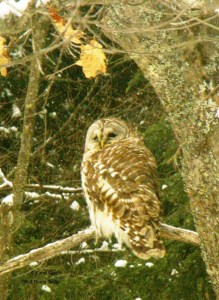
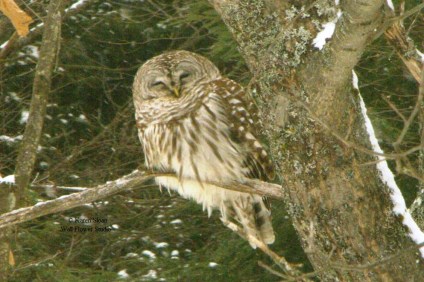
Barred Owl

Here in the Haliburton Highlands, it’s not uncommon to hear owls hooting at night.

They call out to one another across the distance, through the darkness, in and around the forests that surround our house.

Calls range from high-pitched screeching vocals to the more familiar, low-throated husky hoots, put forth with rippled tones that can only be heard in their entirety if both they and you are perched near the same open window.

Depending on your point of view, an owl’s call can be thrilling or bone chilling. I choose the former!

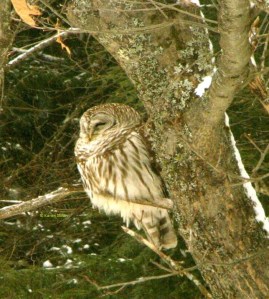
Very recently I was over the moon after spying, quite by chance, a Barred owl perched, napping really, on a dead lower branch in an oak tree behind our home. It’s a rare occasion to see an owl up close during daylight hours. Even more of a thrill than hearing one at night.

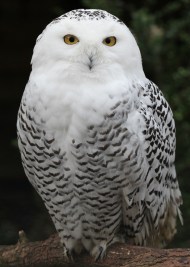
Snowy Owl

The first owl I ever saw, a Snowy owl, occurred only months after moving to the country from Toronto. It was one of those exceptional winters where the snow never seemed to stop accumulating, and due to the extremely cold temps, Snowy owls ventured further south than usual in search of food.

While waiting at our driveway for my son, arriving home momentarily on the school bus, I spotted that Snowy owl in another tree near our house. Magnificent to say the least, I couldn’t wait to point out the owl to my son, who by now was climbing down the steps of the bus.  As we approached the house, and consequently the owl, it took flight, heading directly towards us, swooping not far above our heads, with the soft sound of feathers in flight as we watched it disappear in to the woods beyond.

My son, a youthful old soul, declared that owl was welcoming us to our new home. I describe this as a moment of bliss, where a mother and her child share a real treasure from nature, and a moment I’ll never forget. But, I digress…

Back to the Barred owl, I found myself stating out loud, “Don’t go anywhere. I have to find my camera!”, despite the fact that the window was closed, and the tree this owl occupied is 40 feet from our house. I suspect my cat Luna, the only audience within earshot, must have thought I was speaking to her, and in hindsight, she must have been wondering what the hell I was doing, camping out in the bathroom for such a long time.

It did occur to me at the time that I was forest bathing in the bathroom!

In any case, camera in hand, I grabbed the kitchen stool and shuttled on to the bathroom, where that particular window offered a better angle and view with which to attempt photographing this lovely creature. Sitting on that hard chair on and off for six hours, balancing the camera on the windowsill held steady with a lavender sachet as a prop, I took way too many photos and enjoyed every moment. The best part for me was when the owl flew away. If you’re interested, I had the forethought to capture it here on video.

As an artist,  I’ve depicted them in paintings and sculpture. For some reason, perhaps due to the mystique surrounding them, (among other creatures), they pique my curiosity and have been some sort of a muse over the years. I’ve tried my hand at producing creative depictions of them in various ways, including writing this post!

With this affinity for owls, and like many little girls, I was inducted to the Guides organization as a Brownie. I remember noting how all the group leader’s names were some sort of owl. My friend’s mother who volunteered was ‘Tawny Owl’. I really liked her, and perhaps because of this, I’ve never considered owls to be in any way threatening.

Think of the wise old owl in Winnie the Pooh who wasn’t in anyway threatening. More likely the voice of reason in that blustery, one hundred acre wood.

The owl’s reputation has been much maligned and misunderstood over the centuries. Their appearance, discredited by mankind, has unfairly earned owls negative connotations throughout history. Some of the myth and folklore surrounding them has sadly saddled them with all sorts of insidious labels.

Owl superstitions vary slightly, and each one is interesting, but as a general consensus European folklore especially, foretells that simply hearing an owl can lead to all manners of horrible things including death, war, destruction, pestilence, and more.

Ovid speaks despairingly of owls in his fifth book of ‘The Metamorphoses’, stating “Ignavus bubo, dirum mortalibus omen“, which (thanks to Google translator) loosely means, “Screech owl of evil omen”.

That’s a heavy burden for any creature to bear!

The owl is connected with birth. An ancient belief in England states that an owl appearing near the birth of a child foreboded ill luck to that infant for life.

Shakespeare alludes to this in Henry VI, part III, Act V. sc. vi, where the King, addressing Gloucester, says “The owl shrieked at thy birth, an evil sign.”

Shakespeare again alludes to the owl, this time in connection with magic. In Macbeth, the Witches are careful to introduce the ‘owlet’s wing’ into the bubbling cauldron.

In some areas of China, the owl’s voice is said to resemble the voice of a spirit or demon. Some equate its call with digging a grave, which may account for the lore that an owl’s cry portending someone’s death.

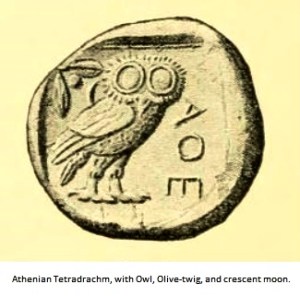
Because an owl’s Gaelic name is Ullaid, (and if you’ll humour me), I do wonder if there’s some connection between the Gauls and Celtic people to Homer’s Iliad. Due to Athena’s connection with that particular literary work, and her affinity with owls, this bird is often referred to as the “owl of Athena”.

Because of this, owls are still used as a symbol of knowledge and wisdom throughout the Western world. Back to the wise owl in Winnie the Pooh! In any case, naïve as it may sound, the two words Ullaid and Iliad side by side always struck me as something worth pondering.

As a spirit animal, the owl represents female energy, it’s connected to the moon, a messenger of truth, and with reference (and reverence) for North American Native Shamanic knowledge and their teachings, owls relate to the Medicine Wheel where the lesson is about removing pride and offering tolerance instead. Something, many people could take note of these days… Just sayin’.

Owls help keep the rodent population down and they’re terrific parents. Simply put, they’re beautiful birds. And, whether it’s wisdom or death, liberty or war, I’m sure the owl will continue to fascinate us for a long time to come.

The myth of this bird contains both dark and light, a balance, just like the two wings any bird requires for flight. As for me, I do hope for another visit from this, and other remarkable creatures, sometime in the near future.


References

  • Snowy Owl – Wikipedia
  • The folk lore and provincial names of British birds, by Swainson, C. A. (Charles Anthony), 1820-1887
    Published, 1886
  • Gaelic names of beasts, birds, fishes, insects, reptiles, etc. in two parts: by Forbes, Alexander Robert, Published, 1905
  • Ovid, Metamorphoses, With an English Translation by Frank Justus Miller, In Two Volumes
    Harvard University Press, Second edition, 1921
  • Thompson, D’Arcy Wentworth. A glossary of Greek birds. Oxford, Clarendon Press 1895, pp 45-46.
  • Gimbutas, Marija (2001). Robbins Dexter, Mirijam, ed. The living goddesses. Berkeley: University of California Press. pp. 157–158. ISBN 9780520927094
  • Image of Athena holding a helmet and a spear, with an owl. Attributed to the Brygos Painter (circa 490–480 BC). The Metropolitan Museum of Art
  • Animal Speak: The Spiritual & Magical Powers of Creatures Great and Small,  by Ted Andrews

Thoughts of Spring and Crocus flowers lead me to the garden

n the first day of Spring my thoughts always lead me to the garden.

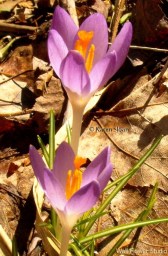
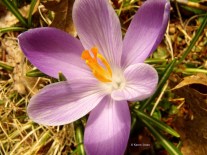
One of the first flowers to greet me after a long winter is the lovely Crocus.

With petal colours varying from white, purple, yellow, and even striped, this small perennial bulb, (corm), planted in autumn for its spring show, originates from the Alps, and offers abundant blossoms that brighten up the beds, often while other parts of the my garden are still heavily laden with snow.

Ancient legend relates Crocus as an unfortunate lover. The myth centres around his unfulfilled and tragic love for Smilax, a woodland nymph, also transformed but in her case, as a brambly vine. His sorrow it is said, awakened sympathy from the gods who aided his metamorphosis into what we now know as this dainty spring flower.

According to old lists containing flower meanings, the Crocus flower is equated to both ‘Spring’ and ‘cheerfulness’. And why not after a long, dreary winter?! Both meanings seem quite appropriate!

Out from the heart of the Crocus,
There leaped to my heart a song,
It was as though an angel
Had borne the word along,
And its message drew and held me,
Until my soul was strong.

~ E.M. Hill

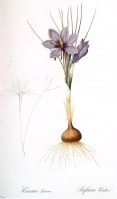
Saffron, the stigma from Crocus sativus is a very expensive spice. Along with being a food additive, it scents perfumes, cosmetics, and is a component of traditional medicines. Studies show it works as an anti-carcinogentic, boosts the immune system, and is an antioxidant.

Shown on frescoes dating from 1700 B.C., it’s no wonder this flower has been cultivated and harvested since ancient times in the Middle East, North Africa, India, and throughout the Mediterranean region.
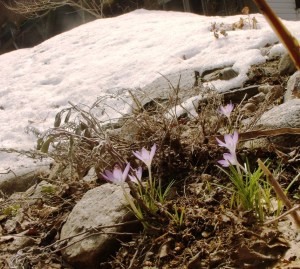
In any case, with three feet of snow still to melt in my neck of the woods, I’ll think of this flower, and others, biding my time until I get to enjoy their presence once again.

Happy Spring!


Four-leaf clovers – More than a lucky Irish symbol

You don’t have to be Irish to know a four-leaf clover is a universal symbol of good luck. This accepted belief is as old as the hills.

A description from 1869 states “four-leaf clovers were gathered at night-time during the full moon by sorceresses, who mixed it with other ingredients, while young girls in search of a token of perfect happiness made quest of the plant by day”

Druids held four-leaf clovers in high esteem. They too considered them a sign of good luck.  As much as I love to read about, and devour any information on these mystical figures, I do take some of it with a grain of salt.

The sad reality is, we just don’t know much about Druids. Except for information written by the likes of Julius Caesar, Tacitus, and Strabo, who as Roman conquerors, and Druids being their enemy, any account from them is likely to be biased.

There are however, many Irish myths and legends pertaining to Druids which may hold historic value and even factual events. But I digress…

Irish folklore tells us finding a clover with four leaves will bring you good luck, however finding a stem with five leaves or more will not bring you more luck.

I’d have to disagree with that. The odds would have to be pretty high for someone to find one, so I’d consider it even more fortunate, indeed!

Each of the four leaves has its own representation, though this varies depending on who you speak with about it. Generally, the most popular meanings are:

  • Faith
  • Hope
  • Love
  • Luck

By the same token, a clover with three leaves has symbolism, too. According to Pliny, it’s connected to the Holy Trinity. In addition, clover was used to make a salve against snake bites, since snakes represented Original Sin, and encouraged by that dastardly serpent in the Garden of Eden. Here, each leaf represents a good deed. In this case:

  • Faith
  • Hope
  • Charity

The most widely cultivated clovers are white clover, Trifolium repens, and red clover, Trifolium pratense.

Clover shoots up easily, even after repeated mowing. It produces nutritious crop for livestock and fixes nitrogen in the soil, which reduces the need for synthetic fertilizer. It grows in all kinds of climates, and it’s a great addition to your compost bin.

Last but not least, it’s one of the earliest plants to produce flowers, making it an important source of nectar for our pollinators, especially bees.

Of interest to floral historians, the Four-Leaf Clover in floral language means – ‘Be Mine’.

Several years ago, I was lucky enough to find a four-leaf clover. I pressed it between the pages of a book, and since then its sat, on one of the bookshelves in my house. Now that I’m writing this post, I’ll have to search for it.
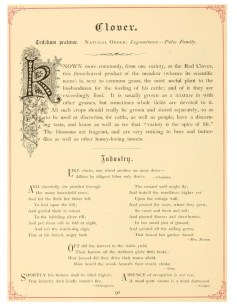
I figure it doesn’t matter if you find the same one twice! When it turns up, it will still be a lucky find.

Top o’ the mornin’ to ya. Make sure to wear something green!

Happy St. Patrick’s Day!


Sources:

  • Rutherford, Ward (1978). The Druids and their Heritage. London: Gordon & Cremonesi.
  • Celtic Studies Resources: Did the Celts or Druids Perform Human Sacrifice?
  • Pliny the Elder. Naturalis Historia. c.78 CE.
  • Tacitus. Annales. Second century CE.
  • Masters MT. 1869. Vegetable Teratology, An Account of the Principal Deviations from the Usual Construction of Plants. Robert Hardwicke Publisher, London, P 356.
  • Mark Kinver, Science and environment reporter, BBC News – Science/Environment – Bumbles make beeline for gardens, study suggests
  • The bouquet – A Poetic Treasury of Flowers, Their Classics and Vocabulary, (pg. 13) by Walser, G. H. (George Henry), 1834-1910
  • Cyclopedia of practical floriculture by Turner, Cordelia Harris – Publication date 1884
  • The images are royalty-free. Use and share as you like.

Vermicomposting – Let worms do the dirty work!

When it comes to vermicomposting, earthworms will do the ‘dirty’ work for you.

Most people know worms turn waste into beautiful compost outdoors, but this can be done indoors, too. It’s an easy way to compost much of your kitchen waste.

Worm castings, the black gold by-product resulting from vermicomposting, contains 5 times more nitrogen, 7 times more phosphorus, and 11 times more potassium than ordinary soil; some of the main minerals a healthy growing plant requires.

Castings are also rich in humic acids. This soil conditioner offers a perfect pH balance. It contains plant growth factors similar to seaweed. What could be better for your garden?

Here in Canada, snow covers outdoor composters and gardens for several months at a time. It might seem easier to take compostable kitchen scraps to land fill. However, for a small investment, vermicomposting can reap benefits far and above the 40 bucks initially spent, and it can be done year round, right in your kitchen!

Here’s how:

  • Purchase 2 plastic storage tote bins from the hardware store.
  • Drill ¼-inch holes in the bottom, sides and top of the box, not just for drainage but for aeration. You don’t want to smother the worms. The box should be approximately 1 square foot of surface area for each person in the household. – e.g.: A 2′ x 2′ x 2′ box can take the food waste of four people.
  • Bedding materials can include shredded newspaper, corrugated cardboard, peat moss, and partially decomposed leaves.
  • Worm boxes should be filled with bedding to provide the worms with a mixed diet, as well as a damp and aerated place to live.
  • Tear newspaper or cardboard into strips before first. Bedding material should be moistened by in water for several minutes. Squeeze out excess water before adding it to your worm box.
  • Cover food waste with a few inches of bedding so flies won’t become a problem.
  • Make sure the worm box doesn’t get too wet.  Worms will not survive and fruit flies will appear. That’s when it will smell. -> Troubleshooting worm bins
  • Red wigglers are considered the best worm to use for vermicomposting. They thrive on organic material such as yard waste and fruit and vegetable scraps.

Do feed them:

  • Coffee grounds or filters
  • Fruit and vegetable scraps
  • Small plant material
  • Tea leaves with bags

Do NOT feed them:

  • Bones
  • Milk and Dairy products
  • Fish
  • Greasy foods
  • Meat
  • Peanut butter
  • Pet/cat litter
  • Vegetable oil/salad dressing

To Harvest castings, feed one end of the box for about a week. The worms will find their way to that side to feed. Remove two-thirds of the worm castings from the opposite end and apply fresh bedding. Start burying food waste in the new bedding, and the worms will move back. The cycle continues!

Tip: Save the casting in a bag to spread on the garden, and top dress some of your indoor plants. They’ll love you for it.

Here are more great links to get you started… Have fun! : )