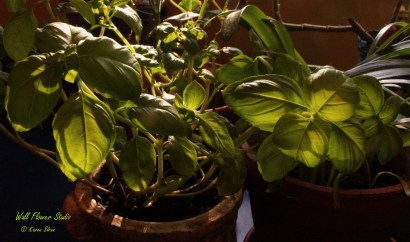
 Basil – Arguably one of the most popular kitchen herbs today, it adds just the right flavour to so many recipes. But, did you know there is folklore surrounding this tasty plant?!
Inspired by #FolkloreThursday on Twitter for some time now, I began researching my favourite plants and flowers to learn their history, and what connections if any, they may have to ancient lore, superstitions, or stories.
In parts of Italy to this day, Basil is considered an herb that inspires love. Its scent is thought to bring about sympathy, and Medieval Italian maidens gave their chosen love a sprig of Basil to ensure their love would be returned in full.
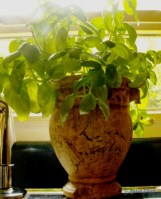 With antibacterial properties, basil is considered to be good insect repellent. Along those lines, it’s good for hornets and wasp stings too, according to Culpeper, “Being applied to the place bitten by the venomous beast, or stung by a wasp or hornet, it speedily draws the poison to it“.
To carry a sprig of Basil in your purse or wallet is supposed to be a way to draw money and abundance to you and your bank account. <- I’ve tried with limited success. 😉
In dispute of what I’ve shared above, the Dierbach’s Flora Mythologica der Griechen und Römer, claims Basil represents poverty. In addition, the approved modern English ‘Dictionary of Flowers,’ states that offering Basil is a way to show hate to one’s enemy.
Who are we supposed to believe? Better not chance it, I’ve just removed the sprig of Basil from my wallet. Perhaps that’s why there was limited success.
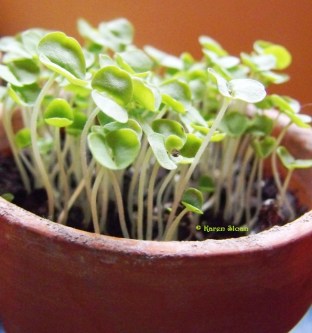 According to ‘The Expert Gardener’ (1640), a work “faithfully collected from Dutch and French authors”, and a whole chapter devoted to the times and seasons which one should “sow and replant all manner of seeds”, this book offers special reference to the phases of the Moon. Specific to Basil and when to sow, reads: “must be sowne in March, when the Moone is old.”
As it’s still February, we’re not quite there. Another month to go before sowing those seeds. But when you do, here is some practical information on how best to grow it.
Basil will reach a height of 24″and spreads from 12-15″
Germination takes 7-10 days, and they should be sown at a shallow depth of 1/8″
Planting Season, other than the folklore above, I suggest outdoors in containers, 1-2 weeks after the last Spring frost has gone. Basil requires full sun for best success, and well-drained soil with plenty of organic matter.
 In any case, with more than 150 varieties of Basil available, my personal favorites include Lemon Basil (Ocimum citrodorium), Purple Basil, less common than its traditional green counterpart, but with an uplifting, punchy flavour and a rich, show stopping colour, and last but not least, the ever popular Italian Large Leaf Basil, that some call Genovese.
All three are perfect for pesto, pasta sauces, and herbal vinegar.
Basil is best used fresh, picked from containers close to your kitchen! Mine are by our dining room door where we have sun all day long.
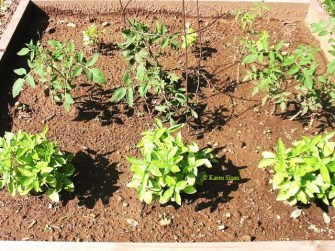 Thankfully, Basil has very few pests, and you can also use it as a companion plant to repel mites and tomato worms. As the saying goes, ‘Tomatoes loves Basil’.
Basil loves its tips pinched, which will encourage fuller plants, delay flowers, and keep it from going to seed.
I suggest letting one plant go to seed so that you can save them to grow again next year, or share with friends.
Personally, I grow Basil indoors on our sunny windowsill all year long. The seeds can be planted anytime!

Pest Recipe – Wall Flower Studio – Feel free to print and share.
Enjoy!

 How extraordinary!
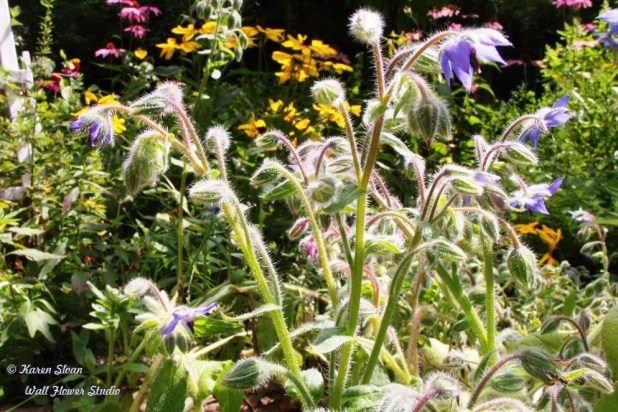
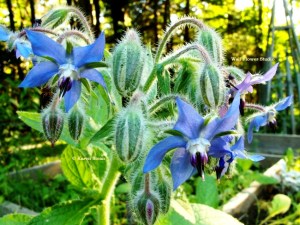
 Thankfully Borage is not a fussy plant and grows well in most soils. I’m happy to report that deer avoid Borage like the plague, likely due to its fuzzy leaves. A real plus in many a gardener’s mind!
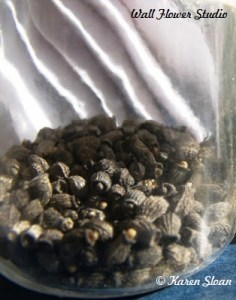 If you like to save and share, Borage seeds are easily harvested, or leave them to self sow.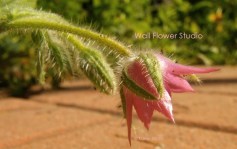



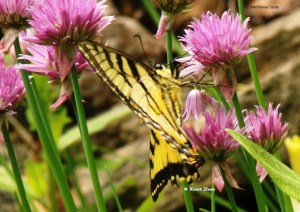 When we strike a balance with nature, creatures of all shapes and sizes with whom we share our neck of the woods all benefit, so it’s a win-win!
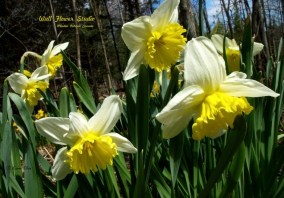 Spring is an ideal time to embrace local biodiversity. We gardeners can see the effects of our handiwork in our own plots.
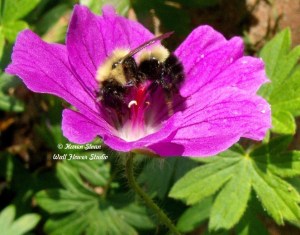 80 percent of food crops grown around the world require pollination and that’s mainly done by the hardworking bee. Unfortunately
  Millions of bees have died and this disturbing occurrence is not just taking place in North America, but all over the world. Because of this, it’s crucial that we gardeners plant our plots to ensure the survival of the bee. We can offer them a safe haven from chemicals, and considering just how important they are with respect to our food supply, the consequences could be devastating to say the least, so our help no matter how small is vital.
 We can help by offering bees, and other pollinators, plants that are attractive to them when foraging for food. Consider growing bee balm (
 The same gardening practices that attract and help wildlife also improve our air, water and soil quality. The benefit goes beyond our gardens, and it only takes a few plants and some forethought to create these habitats.
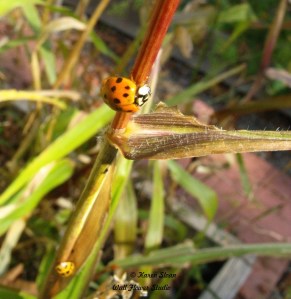 If you’re ambitious, consider selecting a wide variety of plants that provide blooms from early spring into late fall. Hummingbirds happen to prefer red tubular flowers and will visit all season long for them. Butterflies are usually drawn to more
  With very little maintenance, the garden will be a welcome haven for all kinds of
  Borage flowers offer a lovely shade of true blue in the garden.
 How extraordinary!
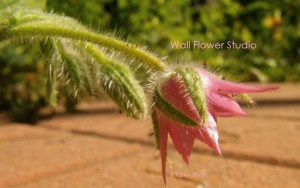
 Thankfully Borage is not a fussy plant and grows well in most soils. I’m happy to report that deer avoid Borage like the plague, likely due to its fuzzy leaves. A real plus in many a gardener’s mind!
 Happy Gardening!
 wallflowerstudiogarden.com