Chelone lyonii, Pink turtle head – A lovely native species offering autumn blooms

The beautiful Chelone lyonii ‘Hot Lips’ also goes by the common name of pink turtlehead. It blooms from July straight through to October, so it’s a terrific addition to any garden.

Chelone comes from the Greek word meaning tortoise because each blossom obviously resembles, without too much imagination, a turtle’s head.

A great perennial for late summer colour that doesn’t much like excessive heat, it will tolerate full sun if its feet are kept cool. The flowers are primarily pollinated by bees, but the Ruby-throated Hummingbirds will often visit them as well. The foliage of this plant is known to be bitter so it’s avoided by Deer and other herbivores. In my own experience the deer have yet to touch the Chelone, so this species is something to cheer about by any rural gardener!

Lucky to have this plant in my garden due to a lovely share from another local gardener, in the six or so years since it’s established, the plant has multiplied from one single flowering stem into more than a dozen. With its strong stems, the clump doesn’t flop over after a rainstorm.

It’s worth noting that there’s a white flowering species called Chelone glabra that I’d like to get my hands on! A host plant for the endangered Baltimore Checkerspot butterfly, and like their pink cousin they too will thrive in damp locations and shady glades.

It’s my hope to collect many seeds this year. I’ll be able to offer them online at my Etsy shop. The pollinators did their jobs well, seed heads are forming, and with a little luck the mild weather we’re currently experiencing means they’ll ripen before the first hard frost. Then I can get my hands on some! Culture/Info:

  • Foliage: Herbaceous smooth-textured.
  • Requires consistently moist soil.
  • Propagation Methods: By dividing the root-ball or from seed.
  • Direct sow outdoors in fall or early spring.
  • Stratify seeds if sowing indoors.
  • Seed Collecting: Allow pods to dry on plant; break open to collect seeds.
  • Non-patented native perennial
  • Height: 24-36 in. (60-90 cm)

Thanks for visiting. Happy Autumn! : )
Flowering Friday – Gladiola

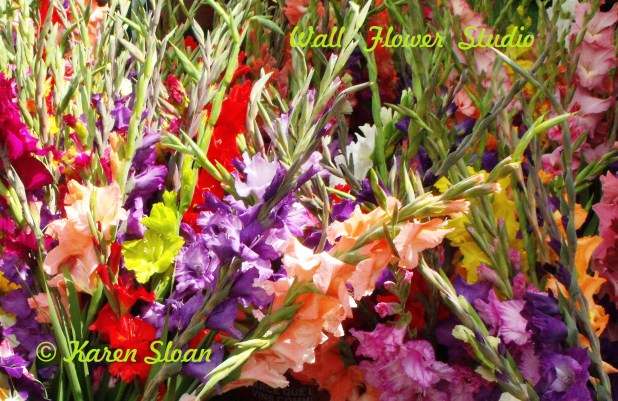
Having worked as a floral designer in Toronto for many years, I developed a love for gladiolas, despite the opinion of many who may look upon them only as flowers for funerals.

These photos were taken at our local farmers’ market a few years ago, back when I was the market manager. Fisher Farms, one of our attendees had several buckets of these beauties in their booth. That glorious group seemed beg me to snap some photos.

My preference is for purple or the light green glads. A vase of a dozen or so look spectacular on our kitchen counter, and as a cut flower they last for ages! Lots of bang for your buck.

Admittedly there were many gladiolas in the garden when we bought our current house. All those spikes standing up like soldiers didn’t endear themselves to me. Not a very welcoming look, so out they went! Just plain bad Feng Shui.. (Plus, they’re not hardy here, and I can be a lazy gardener in my own plot. Who has time to plant the corms each spring and remove them again in the fall? Not me!)  In any case, I’m happy to support local growers and purchase any flowers I prefer in a vase as opposed to my garden, from them.

Lots of colour to share on a monochromatic early spring day! Remember, they’re not just for funerals! Happy flowering Friday, everyone.

Borage – Borago officinalis – A true blue addition to any garden

Borage flowers offer a lovely shade of true blue in the garden.
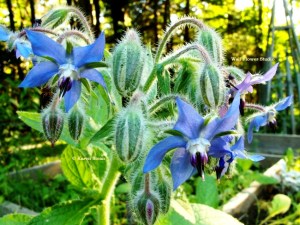
This herb and its star-shaped flowers are not only beautiful, but extremely useful! I’ve always felt this plant was underrated in our gardens, unlike the past where its qualities were highly valued.

Admiring them as one would any species with a historical pedigree, as an heirloom, cultivated since at least the 1440s, the folklore they encompass states just how much borage was valued. It was said to bring courage to one’s heart. “Borage for courage” as the saying goes. Ancient Celtic people believed borage offered courage in the face of enemies on the battle field. How extraordinary!

Back to our modern times, it’s a courageous companion plant, known for repelling hornworms on tomatoes, offering this plant a serious, if not fashionable comeback.

Borage may be considered an annual herb where I live, but it self seeds easily and appreciates any extra warmth offered by the raised beds in our yard. They’ve settled in quite happily!

The dainty flowers are edible, offering a slight cucumber-like flavour. Use them in soups, salads, sandwiches, or as a substitute for spinach (stuffed into traditional pasta), or as a pretty garnish on the plate. A friend of mine uses them to flavour her pickles, while another makes teas and assorted iced drinks with them.

Thankfully Borage is not a fussy plant and grows well in most soils. I’m happy to report that deer avoid Borage like the plague, likely due to its fuzzy leaves. A real plus in many a gardener’s mind!
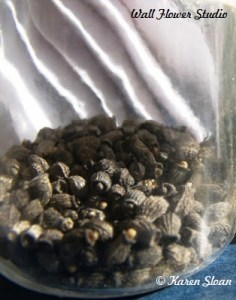
If you like to save and share, Borage seeds are easily harvested. Ore, leave them to self sow and every year you can look forward to them gracing the garden once again.
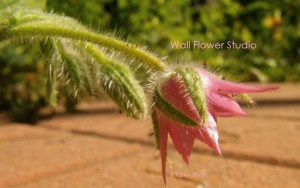
Those showy little blue star-shaped flowers attract bees, butterflies, and all sorts of good pollinators. They’re a wonderful addition to anyone’s garden!

Note:

  1. When planting Borage seeds, the best time to do this is in spring, after any remaining chance of frost. Soak the seeds first in wet paper towel overnight, and then sow them directly into the garden, but not too deep, as half an inch will suffice. Borage will grow to a height of 2- 3 feet.
  2. The oil from Borage seeds is highly valued and plants are now commercially cultivated for skin care products and other items. It’s one of my favourite go-to ingredients for use in my own products.
  3. If you see some of your flowers are pink, then there is likely a deficiency in your soil. Below is a photo from a couple of years ago. I’ve since discovered this is a common site if Borage is growing in dry, gravelly soil. To fix this, simply add some triple-mix or compost. The pink is actually quite pretty, and Borage may even offer white flowers from time to time.

Happy Gardening!

How to grow, pollinate and harvest seeds from an amaryllis – It’s very easy!

amaryllis-vittata-february-2015pistil-and-stigma-for-pollinating-the-amaryllis-karen-sloanPollinating and saving seeds from Amaryllis is very simple. All you need is a light touch.

Step 1: Collect some pollen, (gently), on your finger from the stamen. (see next photo)
Step 2: Dust it lightly on the stigma.
This should be done when the stigma (Pistil) is completely open.

Just a note: Some people use a paint brush to transfer the pollen, but this is not a requirement if you’re very gentle.

I don’t pollinate any flower with its own pollen. I’ll use the pollen from one flower to pollinate another .

seed-pod-developing-on-the-amaryllis-karen-sloan-wall-flower-studio

Unripe seed pod

This is a seed pod that develops not long after, from the pollinated flower that dies back.

Let it mature and turn brown. Then the seed head is ready to harvest.

amaryllis-seed-pod-opening-copyright-karen-sloan-wall-flower-studio

Seed pod is ready to harvest.


Many people ask me how to bring an Amaryllis  into bloom again…  Here’s my advice:

Don’t dig up your bulbs and stick them in the closet in the fall.  Don’t do it. It doesn’t happen that way in nature!

Why anyone started promoting such fiction, I’ll never know.

Seriously, I can’t tell you how much this myth irritates me, and every year I see gardening articles perpetuating this falsehood, repeating it verbatim like parrots, likely by writers who haven’t actually accomplished what they’re proposing you to do..

Because of that, it’s no wonder so many people tell me they’ve given up growing these beauties and can’t get a bulb to re-flower the next year. Purely because something so simple has been made to seem so very complicated…. There’s my rant for today!

amaryllis-seeds-karen-sloan-wall-flower-studio

Freshly harvested, plump amaryllis seeds

In any case, bulbs have an internal clock that works very well, with or without our help.

As long as the flower stalks are allowed to die back naturally after flowering, and there has been sufficient water, light and food over the course of the year, (I only give them a bit of very diluted coffee or tea once a month), then you have the secret to getting them to flower again.

amaryllis-wfsMy amaryllis is 130 years old.

It was my originally my great-great grandmother’s plant, a true heirloom, and I cherish it!

It blooms every year, and sometimes twice. I can tell you, it has NEVER seen the inside of a closet!

Treat it as you would any houseplant, all year long, but ease up on the watering in November.

Don’t let your plant completely dry out, but water it once per month until a flower bud starts to emerge. Then water every 10 days or so. After the flowers finish, let the stalks die back naturally. This is very important as this is what provides the bulb with the energy to produce a flower next year… 

If you don’t like the look of the plant while it’s in this semi-dormant state, put it in a room where it’s not so visible.

Leaves will die back too, and watering should be lessened again ‘til  mid March when the sun gets higher in the sky, and you’ll see an abundance of new foliage. Water more often, as the cycle has begun again.


The unusual Rose of Jericho, aka Resurrection plant, (or even) Zombie plant?!

ressurection-plants-at-wall-flower-studioSharing an unusual North American native plant today, (not from my neck of the woods!), but from Arizona and Texas.  The Selaginella lepidophylla, otherwise known as a rose of Jericho, or resurrection plant, is about as drought tolerant a plant as you can get. It is actually classed as a tumbleweed and this seemingly innocuous species is simply amazing! Let me explain why..

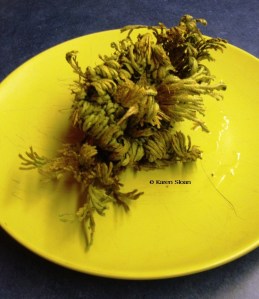
Doesn’t look like much, does it?! A dead root ball, perhaps.. However, mist it with some water, stand back and watch the magic begin as it comes back to life.

Back from the dead, as its name suggests! From a dead ball of brown to a thriving green plant with cedar like ferny foliage, and all in about an hour’s time! Considering the time of year with Halloween approaching, perhaps ‘zombie plant’ wouldn’t be far off, after all. 😉

resurrection-plant-opening-wfs-2016-011I’ve taken a series of photos to show the progress from the above photo to green and alive! It turns green pretty quickly.

This was about 10 minutes after watering.


It starts to unfurl… 15 minutes in.

resurrection-plant-opening-wfs-2016-012

more unfurling.. 20 minutes in.

resurrection-plant-opening-wfs-2016-013


resurrection-plant-opening-wfs-2016-015

The green colour is much more apparent at this point. Deepening to a cedar green colour… 45 minutes in.


Almost all the way open! 55 minutes in.

resurrection-plant-opening-wfs-2016-017


resurrection-plant-opening-wfs-2016-019

Filling out nicely and the green is soft and lush. 65 minutes in.


resurrection-plant-opening-wfs-2016-021Fully open! Looks kind of like a big ferny, mossy chrysanthemum blossom!

Smells like a forest after the rain.

The best part is, you can let it dry right out again. It will return to its natural dried state,  furled up like an animal in a deep winter hibernation, waiting for spring to arrive once again.

For more information on these lovely and unusual plants, visit:

Thank you for visiting!

Wall Flower Studio business logo square