 When it comes to vermicomposting, earthworms will do the ‘dirty’ work for you.
Most people know worms turn waste into beautiful compost outdoors, but this can be done indoors, too. It’s an easy way to compost much of your kitchen waste.
Worm castings, the black gold by-product resulting from vermicomposting, contains 5 times more nitrogen, 7 times more phosphorus, and 11 times more potassium than ordinary soil; some of the main minerals a healthy growing plant requires.
 Castings are also rich in humic acids. This soil conditioner offers a perfect pH balance. It contains plant growth factors similar to seaweed. What could be better for your garden?
Here in Canada, snow covers outdoor composters and gardens for several months at a time. It might seem easier to take compostable kitchen scraps to land fill. However, for a small investment, vermicomposting can reap benefits far and above the 40 bucks initially spent, and it can be done year round, right in your kitchen!
Here’s how:
- Purchase 2 plastic storage tote bins from the hardware store.
- Drill ¼-inch holes in the bottom, sides and top of the box, not just for drainage but for aeration. You don’t want to smother the worms. The box should be approximately 1 square foot of surface area for each person in the household. – e.g.: A 2′ x 2′ x 2′ box can take the food waste of four people.
- Bedding materials can include shredded newspaper, corrugated cardboard, peat moss, and partially decomposed leaves.
- Worm boxes should be filled with bedding to provide the worms with a mixed diet, as well as a damp and aerated place to live.
- Tear newspaper or cardboard into strips before first. Bedding material should be moistened by in water for several minutes. Squeeze out excess water before adding it to your worm box.
- Cover food waste with a few inches of bedding so flies won’t become a problem.
- Make sure the worm box doesn’t get too wet. Worms will not survive and fruit flies will appear. That’s when it will smell. -> Troubleshooting worm bins
- Red wigglers are considered the best worm to use for vermicomposting. They thrive on organic material such as yard waste and fruit and vegetable scraps.
Do feed them:
- Coffee grounds or filters
- Fruit and vegetable scraps
- Small plant material
- Tea leaves with bags
Do NOT feed them:
- Bones
- Milk and Dairy products
- Fish
- Greasy foods
- Meat
- Peanut butter
- Pet/cat litter
- Vegetable oil/salad dressing
To Harvest castings, feed one end of the box for about a week. The worms will find their way to that side to feed. Remove two-thirds of the worm castings from the opposite end and apply fresh bedding. Start burying food waste in the new bedding, and the worms will move back. The cycle continues!
Tip: Save the casting in a bag to spread on the garden, and top dress some of your indoor plants. They’ll love you for it.
Here are more great links to get you started… Have fun! : )
- http://www.vermiculture.ca/vermiculture_resources/vermiculture_resources_canada.htm
- http://www.cathyscomposters.com/
- https://www.epa.gov/recycle/how-create-and-maintain-indoor-worm-composting-bin
- http://ibis.geog.ubc.ca/biodiversity/efauna/EarthwormsIntroduction.html
- http://compost.css.cornell.edu/worms/basics.html
- Directions to build a bin: http://whatcom.wsu.edu/ag/compost/wormbins.htm
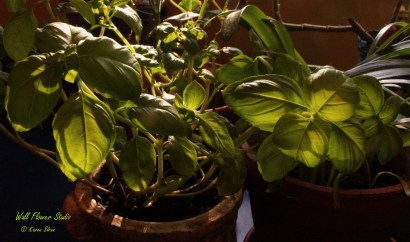 Basil – Arguably one of the most popular kitchen herbs today, it adds just the right flavour to so many recipes. But, did you know there is folklore surrounding this tasty plant?!
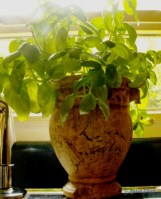 With antibacterial properties, basil is considered to be good insect repellent. Along those lines, it’s good for hornets and wasp stings too, according to Culpeper, “Being applied to the place bitten by the venomous beast, or stung by a wasp or hornet, it speedily draws the poison to it“.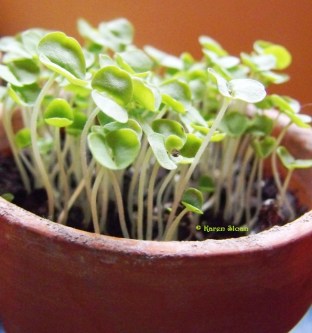

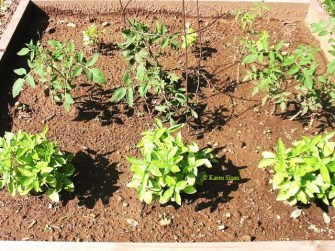




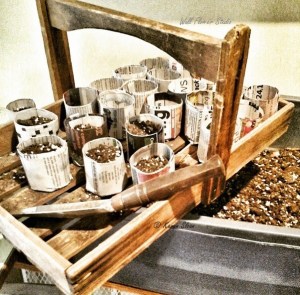
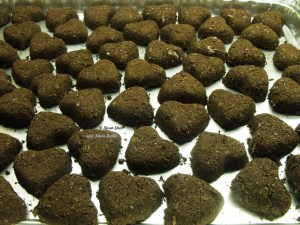


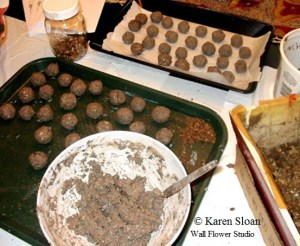
 Next step is to add water. Not too much, or too quickly, but enough to make the mixture damp. Stir it in slowly. If the mix is too dry, it won’t hold together so add a bit more. If the soil and clay become overly wet, the seeds will sprout before your finished seedballs get a chance to dry, which means you can’t store them to use at a later date. If the clump holds together, but won’t ooze water if you squeeze it, then that’s the perfect consistency.

 wallflowerstudiogarden.com