 The beautiful Chelone lyonii ‘Hot Lips’ also goes by the common name of pink turtlehead. It blooms from July straight through to October, so it’s a terrific addition to any garden.
Chelone comes from the Greek word meaning tortoise because each blossom obviously resembles, without too much imagination, a turtle’s head.
A great perennial for late summer colour that doesn’t much like excessive heat, it will tolerate full sun if its feet are kept cool. The flowers are primarily pollinated by bees, but the Ruby-throated Hummingbirds will often visit them as well. The foliage of this plant is known to be bitter so it’s avoided by Deer and other herbivores. In my own experience the deer have yet to touch the Chelone, so this species is something to cheer about by any rural gardener!
 Lucky to have this plant in my garden due to a lovely share from another local gardener, in the six or so years since it’s established, the plant has multiplied from one single flowering stem into more than a dozen. With its strong stems, the clump doesn’t flop over after a rainstorm.
It’s worth noting that there’s a white flowering species called Chelone glabra that I’d like to get my hands on! A host plant for the endangered Baltimore Checkerspot butterfly, and like their pink cousin they too will thrive in damp locations and shady glades.
It’s my hope to collect many seeds this year. I’ll be able to offer them online at my Etsy shop. The pollinators did their jobs well, seed heads are forming, and with a little luck the mild weather we’re currently experiencing means they’ll ripen before the first hard frost. Then I can get my hands on some! Culture/Info:
- Foliage: Herbaceous smooth-textured.
- Requires consistently moist soil.
 Propagation Methods: By dividing the root-ball or from seed.
- Direct sow outdoors in fall or early spring.
- Stratify seeds if sowing indoors.
- Seed Collecting: Allow pods to dry on plant; break open to collect seeds.
- Non-patented native perennial
- Height: 24-36 in. (60-90 cm)
Thanks for visiting. Happy Autumn! : )




 Build a composter
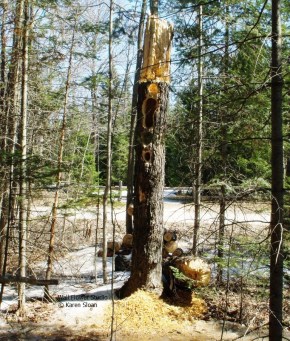
 Once the snow starts melting here in the Haliburton Highlands, it’s like opening Pandora’s Box.
 For those of you who do live in milder climes, we’re playing catch-up here, (weather-wise), as most living in the rest of this continent, except of course those located farther north, have been experiencing growth in their plots for some time.
 One of my yearly rituals, (as that’s exactly what this has become. but I’m likely not alone in this), is to inspect the garden once most of the ground is reviving from its snowy grip. Not only do I see what’s popping up, but it really offers me insight into any damage that may have occurred, not only from the force of winter itself, but any neighboring creatures who co-habitat the property.
 Sharing here is two-fold – Interested like minds see what happening in this neck of the woods, and it’s a visual compendium to look back upon from year to year. I note any changes that have taken place throughout the property, and this also prompts me with ideas, (sometimes outrageous/unrealistic ones) on what I’d like to continue with/change this coming year.
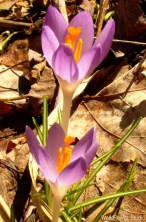
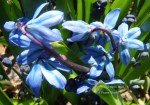
 Many bulbs are shooting up and the daffs are not in flower yet, but crocuses are strutting their stuff, as are the blue scilla.
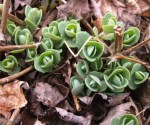 In any case, this is yesterday’s garden tromp à la Wall Flower Studio, the garden, not the shop! Pending publishing this post, I shall be out the door for another adventure.
 wallflowerstudiogarden.com