
 The beautiful Chelone lyonii ‘Hot Lips’ also goes by the common name of pink turtlehead. It blooms from July straight through to October, so it’s a terrific addition to any garden.
Chelone comes from the Greek word meaning tortoise because each blossom obviously resembles, without too much imagination, a turtle’s head.
A great perennial for late summer colour that doesn’t much like excessive heat, it will tolerate full sun if its feet are kept cool. The flowers are primarily pollinated by bees, but the Ruby-throated Hummingbirds will often visit them as well. The foliage of this plant is known to be bitter so it’s avoided by Deer and other herbivores. In my own experience the deer have yet to touch the Chelone, so this species is something to cheer about by any rural gardener!
 Lucky to have this plant in my garden due to a lovely share from another local gardener, in the six or so years since it’s established, the plant has multiplied from one single flowering stem into more than a dozen. With its strong stems, the clump doesn’t flop over after a rainstorm.
It’s worth noting that there’s a white flowering species called Chelone glabra that I’d like to get my hands on! A host plant for the endangered Baltimore Checkerspot butterfly, and like their pink cousin they too will thrive in damp locations and shady glades.
It’s my hope to collect many seeds this year. I’ll be able to offer them online at my Etsy shop. The pollinators did their jobs well, seed heads are forming, and with a little luck the mild weather we’re currently experiencing means they’ll ripen before the first hard frost. Then I can get my hands on some! Culture/Info:
- Foliage: Herbaceous smooth-textured.
- Requires consistently moist soil.
 Propagation Methods: By dividing the root-ball or from seed.
- Direct sow outdoors in fall or early spring.
- Stratify seeds if sowing indoors.
- Seed Collecting: Allow pods to dry on plant; break open to collect seeds.
- Non-patented native perennial
- Height: 24-36 in. (60-90 cm)
Thanks for visiting. Happy Autumn! : )


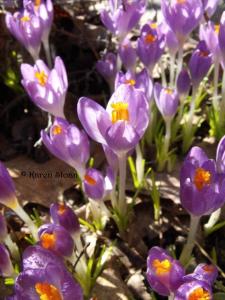 A big welcome back, spring… you’re my favourite season of them all. You’re full of potential and a new start to another year in the garden. I can hardly wait!
 The photos I’m sharing here are actually crocus pictures from last April. We still have much snow on the ground in my neck of the woods, but with the equinox on our doorstep there is light at the end of the tunnel!
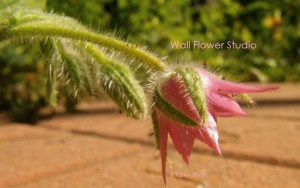
 Borage flowers offer a lovely shade of true blue in the garden.
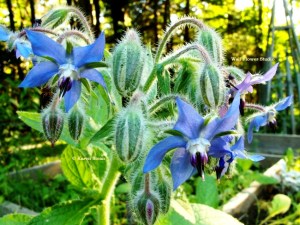 How extraordinary!
 Thankfully Borage is not a fussy plant and grows well in most soils. I’m happy to report that deer avoid Borage like the plague, likely due to its fuzzy leaves. A real plus in many a gardener’s mind!
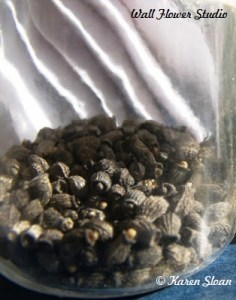 If you like to save and share, Borage seeds are easily harvested. Ore, leave them to self sow and every year you can look forward to them gracing the garden once again.
 Happy Gardening!
 wallflowerstudiogarden.com