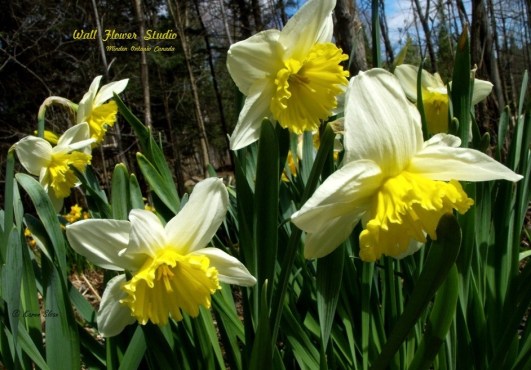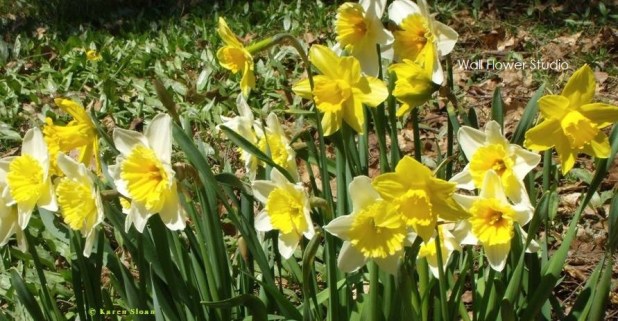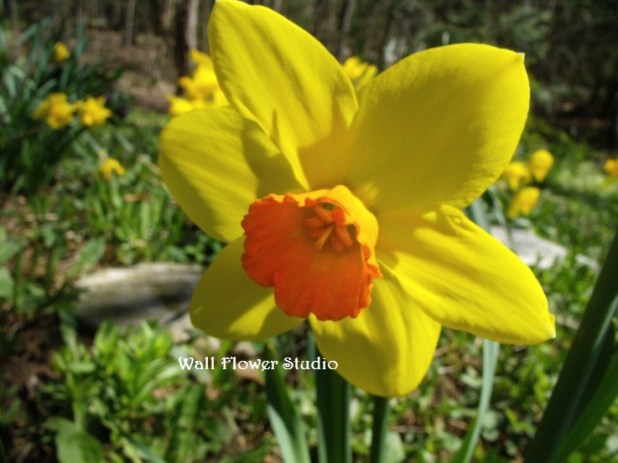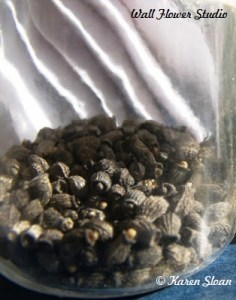
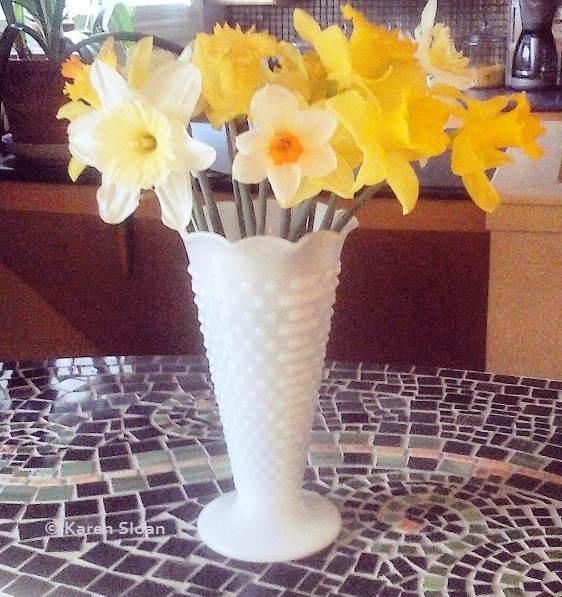
Sharing some spring #daffodils on #WordlessWednesday

Forage for Borage – A historic and useful herb for any garden

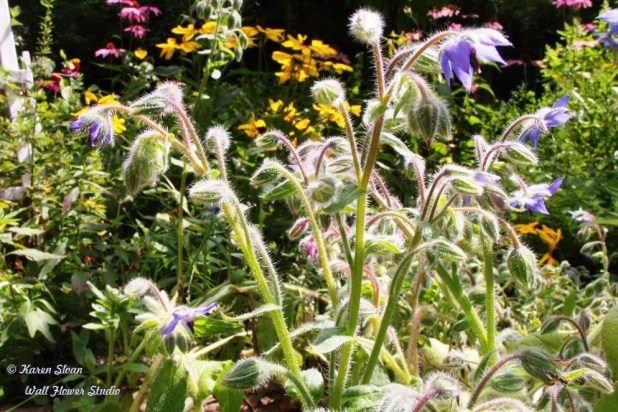
Borage flowers – A true blue addition to any garden!

This herb with its star-shaped flowers is not only beautiful, but extremely useful!

I’ve always felt this plant was underrated in our gardens, unlike in the past where its qualities were highly valued.

Admiring them as one would any species with a historical pedigree, this heirloom has been cultivated since (at least) the 1400s, and the folklore they encompass states just how much borage was valued.

It was said to bring courage to one’s heart. “Borage for courage” as the saying goes. Ancient Celtic people believed borage offered courage in the face of enemies on the battle field. How extraordinary!

In our modern times the quote should be renamed “Forage for Borage” 😉  As a courageous companion plant, it’s known to repel hornworms on tomatoes, offering this plant a serious if not fashionable comeback.

Borage may be considered an annual herb where I live, but it self seeds easily and appreciates any extra warmth offered by the raised beds in our yard. They’ve settled in quite happily!

The dainty flowers are edible, offering a slight cucumber-like flavour. Use them in soups, salads, sandwiches, or as a substitute for spinach (stuffed into traditional pasta), or as a pretty garnish on the plate. A friend of mine uses them to flavour her pickles, while another makes teas and assorted iced drinks with them. In addition there’s a recipe for a simple syrup at the end of this post.

Thankfully Borage is not a fussy plant and grows well in most soils. I’m happy to report that deer avoid Borage like the plague, likely due to its fuzzy leaves. A real plus in many a gardener’s mind!

If you like to save and share, Borage seeds are easily harvested, or leave them to self sow.

Every year you can look forward to them gracing the garden once again.

Those showy little blue star-shaped flowers attract bees, butterflies, and all sorts of good pollinators. They’re a wonderful addition to anyone’s garden!

Note:

  1. When planting Borage seeds, the best time to do this is in spring, after any remaining chance of frost. Soak the seeds first in wet paper towel overnight, and then sow them directly into the garden, but not too deep, as half an inch will suffice.
  2. Borage will grow to a height of 2- 3 feet.
  3. The oil from Borage seeds is highly valued and plants are now commercially cultivated for skin care products and other items. It’s one of my favourite go-to ingredients for use in my own products.
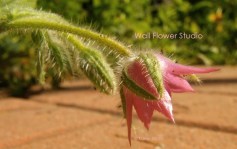
  4. If you see some of your flowers are pink, then there is likely a deficiency in your soil. Below is a photo from a couple of years ago. I’ve since discovered this is a common site if Borage is growing in dry, gravelly soil. To fix this, simply add some triple-mix or compost. The pink is actually quite pretty, and Borage may even offer white flowers from time to time.

Recipe: Borage Simple Syrup

This simple syrup offers up a light cucumber flavour.

1 cup water
2 cups sugar
1/2 cup borage flowers

– Bring the sugar and water to simmer, until all the sugar has dissolved.
– Add the flowers, simmer for 2 -3 minutes and remove from heat
– Let this steep for at least 2 hours before straining.
– Keep this in the refrigerator and use within one month.
– Makes about 1 & 1/4 cups

It’s the perfect addition to a summer cocktail.. Enjoy!

Happy Gardening! 🙂


Along with beauty and scent, Hyacinth flowers offer us myth and folklore, too!

Several weeks ago we hosted a wonderful family gathering at our home. Because of this, we were the lucky recipients of beautifully potted, forced hyacinths.

A Hyacinth, aka Hyacinthus, are bulbous, perennial plants, native to the eastern Mediterranean from the south of Turkey to northern Israel.

Here in Canada, we plant these hardy bulbs in the fall.  Come springtime, they grow to a height of 6-8 inches, appearing in our gardens after the snow and (hopefully) any frost has gone.

The Hyacinth was so popular in the 18th century that more than 2,000 cultivars were grown in the Netherlands, its chief commercial producer.

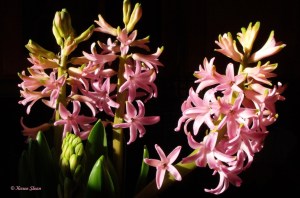
I enjoyed the heady aroma of these spectacular spring flowers very much over the course of the following week. When heading upstairs to our kitchen where the flowers were on display, I could smell them before seeing them. Admittedly, I could get used to that!

After such a long winter, (hopefully behind us now, but with today’s weather, that’s questionable), it was a pure feeling of joy to experience the sight of those blooms and their exquisite perfume.

‘The Death of Hyacinth’ by Giovanni Battista Tiepolo. – Museo Thyssen-Bornemisza, Madrid. Public Domain

These lovely, highly scented Hyacinths earned their name to honour a youth, accidentally killed by his friend and lover, the Greek god Apollo.

Homer wrote that the flowers appeared when the drops of blood from this fallen fellow met the ground.

Many floral enthusiasts like me are curious about botanical symbolism and the history behind flower names.

Any legendary correlations, little known details, quips, lore and tales about the natural world, linking all of it together, are usually a delight to discover!

I suspect any plant one could name, be it flower or tree, has a yarn spinning behind it!

With relation to the natural world, classical literature linked flowers to the gods via epic poems and tales that Homer, Ovid and others have spun, explaining beauty and the creation of so many botanical species.

Others fairy tales include life lessons that even today point out human frailties. Our contemporary society can still learn from these relatable plots as we still manage to trip over our own egos from time to time, not unlike the characters from many a fable.

With that in mind, it’s no wonder to this day we still offer floral tributes honouring people in our lives, marking every event from birth to death, and everything in between, or just because!

As you can see, cats aren’t immune to botanical beauties either. Even my cat Luna likes to stop and smell the flowers!

Have a good weekend, and Happy Gardening!
The first flowers of spring – Friday Flowers – Crocus

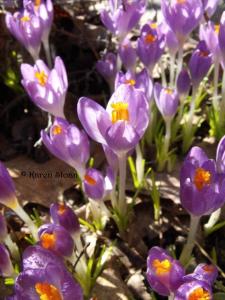
Happy to share that the lovely little crocus flowers are holding their heads up high in the garden.

The first blooms in spring offer any gardener something to cheer about!

One clump of crocus has a view (of what I’m calling a small glacier) on the driveway.

Thankfully milder weather has arrived, so that snow is melting fast!

Crocus, like the narcissus flower, has its own connection to Classical Greek mythology.

It turns out Crocus was a mortal youth who, because he was unhappy with his love affair with a nymph named Smilax, he was turned into this plant by the gods.

In another variation of the myth, Crocus was said to be a companion of Hermes. He was accidentally killed by Hermes in a game of discus. He was so distraught about it that he transformed Crocus’ body into a flower.

A fitting tribute!

Have a lovely weekend, everyone!


Celebrating Earth Day while waiting for Spring

Earth Day, until this year, always leads me outside to celebrate a day close to my heart. I celebrate this important day in this little section of our lovely planet that I call my garden.

Every year I look forward to the clean dirt under my fingernails, the chance to snap photos of any life emerging beneath my feet, the sight of scent of flowers and buds, and the chance to tidy up of winter’s litter.

That activity includes ridding the garden of fallen branches, along with my yearly, somewhat meditative activity of flipping those Vole trails, (which look like miniature WW1 trenches), in the lawn back in to place with my feet.

Not so this year. To be in the garden right now means tromping through snow!

This is not my idea of fun, or my idea of any spring for that matter. (Even my cat Luna doesn’t want to go outside. Great minds think alike!)

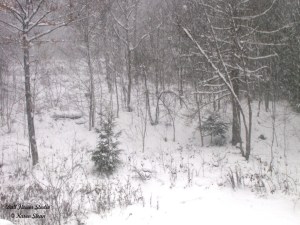
The snowy photo here was taken just last weekend. As any of you fellow gardeners can likely relate, I was not a happy camper. 😉

Spring just isn’t willing to fully embrace me here in middle Ontario yet, and Mother Nature has not eliminated the snow in my garden.

My response? I’ve turned the other cheek, discarded all expectations of when my favourite season will actually arrive, took the bull by the horns, (along with a few dollars), and bought myself a lovely potted Primula, or as I like to call it, that little bit of spring to enjoy in the kitchen until I’m sure this winter is truly done.

Having said that, the day is holding some promise!

Currently, the sun is shining which in turn means the snow is melting. Things are looking up, pardon the pun. The temperature is actually above zero.. smiles all around!

On second thought, I’m going out and tromp around in the snow after all.

Enjoy and take care of your spot on our planet.

Happy Earth Day!